Prospective transnational migrant workers’ language practices during internal migration
DOI:
https://doi.org/10.22452/jml.vol35no2.5Keywords:
Language Shift, Language Preference, Internal Migration, Migrant Workers, Migration LinguisticsAbstract
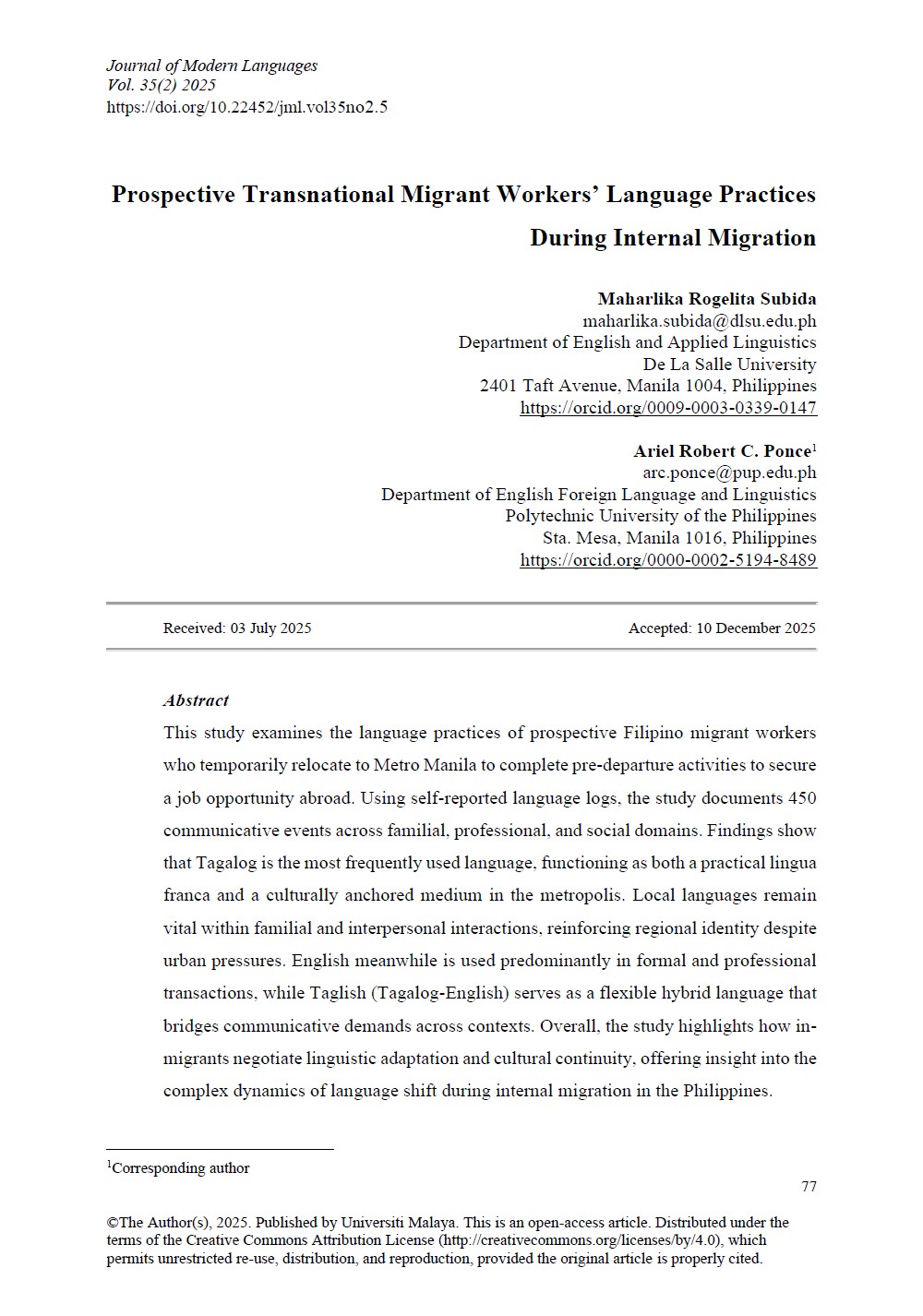
This study examines the language practices of prospective Filipino migrant workers who temporarily relocate to Metro Manila to complete pre-departure activities to secure a job opportunity abroad. Using self-reported language logs, the study documents 450 communicative events across familial, professional, and social domains. Findings show that Tagalog is the most frequently used language, functioning as both a practical lingua franca and a culturally anchored medium in the metropolis. Local languages remain vital within familial and interpersonal interactions, reinforcing regional identity despite urban pressures. English meanwhile is used predominantly in formal and professional transactions, while Taglish (Tagalog-English) serves as a flexible hybrid language that bridges communicative demands across contexts. Overall, the study highlights how in-migrants negotiate linguistic adaptation and cultural continuity, offering insight into the complex dynamics of language shift during internal migration in the Philippines.
Downloads
Published
Issue
Section
Categories
License
Copyright (c) 2025 Maharlika Rogelita Subida, Ariel Robert Ponce

This work is licensed under a Creative Commons Attribution-NonCommercial 4.0 International License.